
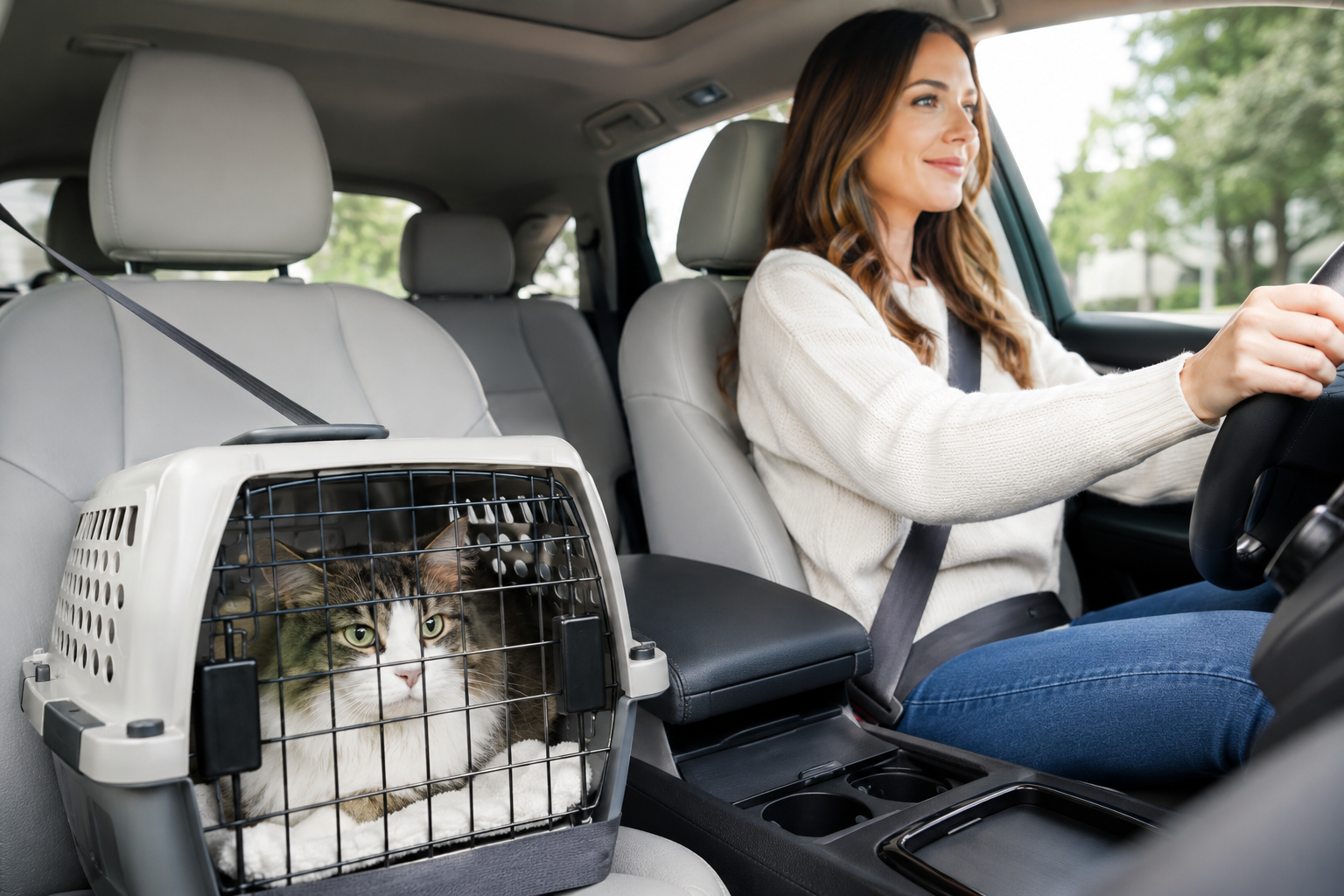
If you’ve ever transported a cat in your vehicle, you may have noticed that allergy symptoms can linger long after the cat is gone. Sneezing, itchy eyes, congestion, and even asthma symptoms may occur every time you get into the car, leaving many allergy sufferers wondering: Can cat allergens actually be removed from a car?
The short answer is yes—but completely eliminating cat allergens from a vehicle can be challenging. Cat allergen proteins are incredibly small and can become embedded in upholstery, carpeting, seat belts, air vents, and other hard-to-clean areas.
The good news is that with the right cleaning approach, you can dramatically reduce allergen levels and make your vehicle far more comfortable for allergy sufferers.
Why Cat Allergens Are So Difficult to Remove
Most people assume that cat hair is the problem. In reality, the primary culprit is a protein called Fel d 1, which is found in a cat’s saliva, skin secretions, and dander.
As cats groom themselves, this protein spreads onto their fur and skin. Tiny allergen particles then accumulate throughout the environment.
In a vehicle, allergens commonly collect on:
- Fabric seats
- Seat belts
- Floor carpeting
- Trunk carpeting
- Floor mats
- Headliners
- Air vents
- Cabin air filters
Because vehicles are enclosed spaces, allergen concentrations can sometimes become surprisingly high.
If you’re unfamiliar with the science behind cat allergies, our guide Cat Allergies Explained provides a detailed overview of how cat allergens affect sensitive individuals.
How Long Do Cat Allergens Stay in a Car?
Without cleaning, cat allergens can remain in a vehicle for months.
Just like they do in homes, allergen particles settle into fabrics and dust reservoirs. Every time someone sits in a seat, adjusts a seat belt, or turns on the ventilation system, some of those particles may become airborne again.
The timeline depends on factors such as:
- How often the cat rode in the vehicle
- Whether the cat traveled in a carrier
- The type of interior materials
- Ventilation
- Cleaning frequency
Cars with cloth interiors generally retain allergens longer than vehicles with leather or vinyl seating.
Can You Completely Remove Cat Allergens?
In many cases, allergen levels can be reduced dramatically, but achieving absolute zero exposure is difficult.
Fortunately, most allergy sufferers don’t need complete elimination. A substantial reduction is often enough to greatly improve symptoms.
The goal is to remove allergen reservoirs and prevent particles from continuously recirculating through the vehicle.
Step 1: Remove All Visible Cat Hair
Before addressing allergens, remove as much hair as possible.
Effective tools include:
- Rubber pet-hair brushes
- Lint rollers
- Vacuum attachments designed for upholstery
- Damp microfiber cloths
Even though hair itself is not the allergen, it often carries allergen proteins.
Step 2: Vacuum Thoroughly
A thorough vacuuming is one of the most important steps.
Focus on:
- Seats
- Carpet
- Floor mats
- Trunk area
- Cracks and crevices
- Under seats
A vacuum equipped with a HEPA filter is preferable because it captures fine allergen particles instead of redistributing them into the air.
Step 3: Clean Upholstery and Carpets
Fabric surfaces tend to hold the highest allergen concentrations.
For cloth seats and carpeting:
- Use an upholstery cleaner
- Consider a hot-water extraction machine
- Allow surfaces to dry completely
Deep cleaning can remove allergens embedded beneath the surface that ordinary vacuuming may miss.
Step 4: Don’t Forget the Seat Belts
Seat belts are often overlooked but can hold significant amounts of cat hair and allergen residue.
Extend the belts fully and wipe them down with a damp microfiber cloth and a mild cleaning solution.
Because seat belts are frequently handled and positioned close to the face, cleaning them can make a noticeable difference.
Step 5: Replace the Cabin Air Filter
Many people overlook the cabin air filter.
If a cat has traveled in the vehicle, allergen particles may have been drawn into the ventilation system.
Replacing the cabin air filter can help prevent allergens from being recirculated whenever the heating or air conditioning system is used.
Step 6: Wipe Hard Surfaces
Allergen particles can settle on:
- Dashboards
- Door panels
- Consoles
- Cup holders
- Steering wheels
Use a damp microfiber cloth to capture particles instead of dry dusting, which may simply push allergens back into the air.
Step 7: Consider an Air Purifier
For individuals with severe cat allergies, a portable HEPA air purifier designed for vehicles may provide additional relief.
While it won’t eliminate allergens embedded in fabrics, it can help reduce airborne particles during daily use.
What If You Bought a Used Car That Carried Cats?
This situation is surprisingly common.
If a previous owner regularly transported cats, allergens may remain in the vehicle even if it appears clean.
A comprehensive cleaning process that includes:
- Vacuuming
- Upholstery cleaning
- Cabin filter replacement
- Surface wiping
can significantly reduce exposure.
However, highly sensitive individuals may require multiple rounds of cleaning before symptoms improve.
The Bottom Line
Yes, cat allergens can be removed from a car—or at least reduced to much lower levels. The most effective approach combines hair removal, deep vacuuming, upholstery cleaning, surface wiping, and replacement of the cabin air filter.
Because cat allergens can persist in fabrics and dust for extended periods, thorough cleaning is often necessary to achieve meaningful results.
For a deeper understanding of why these allergens are so persistent, read our guides Cat Allergies Explained and How Long Do Cat Allergens Stay in a Home, where we explore how cat allergens spread, where they hide, and the most effective ways to reduce exposure.